Brent GP hub revamps evening access for working residents
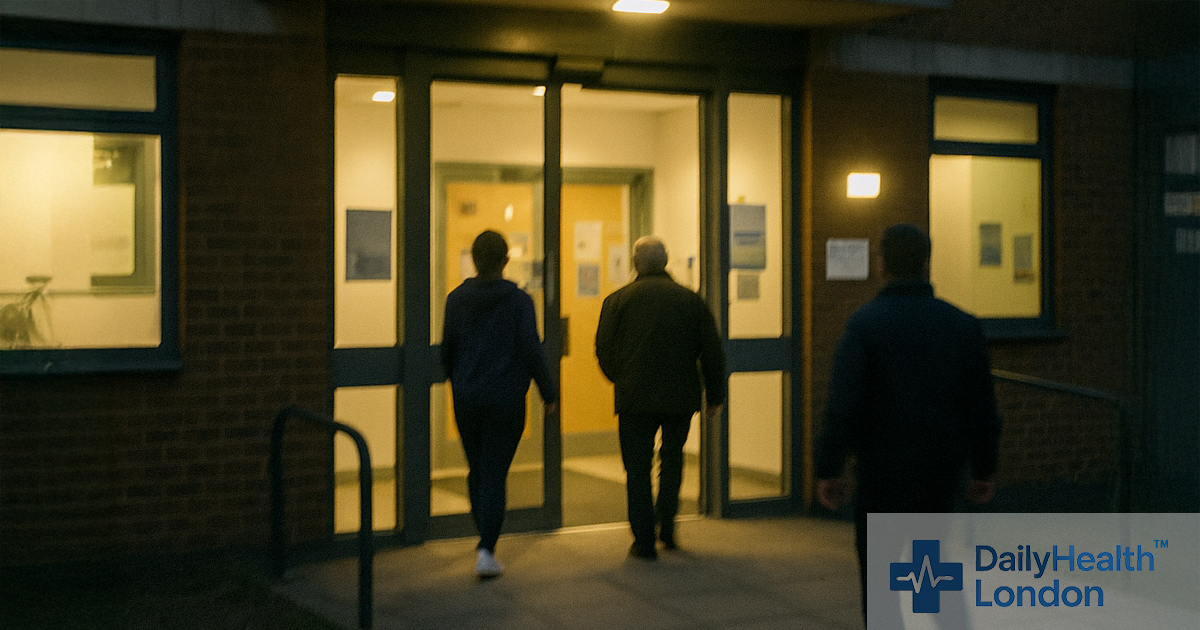
The extended access hub at Wembley Centre for Health & Care in Brent has overhauled its evening and weekend timetable for local residents this year, as North West London’s access specification for general practice is implemented across nine hubs and reshapes how working people and carers book routine appointments outside standard surgery hours from spring 2025 onwards.
The hub, one of Brent’s network of extended access sites, now offers pre-booked GP, nursing and multidisciplinary appointments from 6.30pm to 8pm on weekdays and from mid-morning to late afternoon on Saturdays, consolidating a pattern that local primary care leaders describe as a “front door after work” for patients registered with nearby practices. Standardised hours across the network follow an expansion from seven to nine hubs since late 2024, widening the spread of evening and weekend capacity across neighbourhoods in north-west London.
For many patients the change is less about new services than about predictability. The hub’s appointments are booked through people’s own surgeries, but the addition of digital telephony systems, online consultation routes and more structured care navigation means reception teams can direct requests to either same-day practice slots or the hub’s later sessions without relying on a first-come, first-served morning scramble. Brent’s access plans emphasise matching people to the right professional in the right place, rather than relying solely on a single GP list to absorb all demand.
Activity figures for 2024–25 suggest that the extended access model is now firmly embedded in local routines. According to a Brent Primary Care Transformation Executive Group update to the borough’s Health and Wellbeing Board, primary care networks in Brent offered 178,097 appointment slots outside core practice hours that year, of which 165,970 were used, giving an overall utilisation rate of 93 per cent across the extended access hubs.
The same report shows that demand for these non-core sessions has carried into 2025–26 rather than tapering off once initial publicity faded. Across April and May 2025 alone, a total of 24,602 appointments were delivered over 5,540 hours in extended access hubs, achieving a utilisation rate of 94 per cent, with each network able to adjust its mix of in-person and remote appointments to reflect local working patterns and clinical priorities.
Behind the scenes, digital channels are increasingly woven into the way residents reach both their own surgeries and the hub. Brent’s update paper notes that by March 2025, 288,295 patients registered with local GP practices had signed up to use the NHS App, representing 63.7 per cent of the borough’s registered list and supporting a marked increase in online bookings and record access across 2024–25. For the hub’s patients, that means more test results, repeat prescriptions and follow-up questions are handled digitally, leaving evening slots free for issues that need a longer consultation.
The access model also sits alongside a wider set of enhanced services that use the hub’s timetable to reach people whose work or caring roles make daytime appointments difficult. Brent’s primary care networks collectively run schemes for childhood immunisations, cervical screening and chronic disease monitoring, with the update paper highlighting how extended access hubs help deliver these services at scale for working families. With 51 GP practices serving around 525,582 registered patients in the borough, local leaders describe the hub network as one way of spreading capacity more evenly between busy high streets, town centres and residential neighbourhoods.
National policy has nudged this direction of travel. NHS England’s delivery plan for recovering access to primary care, first published in 2023 and updated for 2024–25, asks practices to move towards “modern general practice access” by combining digital telephony, online consultation platforms and more structured self-referral routes with retained phone and face-to-face options for those who need them. Brent’s model reflects that blend, with extended access hubs using shared records and common protocols so that appointments booked through a person’s home practice can be delivered by clinicians based at the hub without fragmenting their care.
For staff working in the Wembley hub and its sister sites, the extended evening pattern changes the shape of the working day but not necessarily the core tasks. The Brent report describes teams made up of GPs, nurses, pharmacists and health support workers, drawing on the national Additional Roles Reimbursement Scheme to bring in health and wellbeing coaches and social prescribing link workers alongside traditional clinical roles. These teams are expected to combine routine chronic disease reviews, on-the-day acute assessments and follow-up checks from earlier in the week, so that people do not have to choose between work and their health when appointments are offered.
From the patient side, the hub is most visible as a practical extension of familiar services rather than a standalone project. Residents still contact their own practice, often through the NHS App or new phone systems, and are then offered slots either at the surgery or at an extended access hub according to their needs and availability. For working-age adults, carers and families in Brent, the steady utilisation figures suggest that these extra hours are now part of the everyday fabric of primary care, absorbing a portion of demand that might otherwise fall to same-day requests or spill over into other settings, while giving local teams more room to balance continuity and convenience.
-
democracy.brent.gov.ukhttps://democracy.brent.gov.uk/documents/s151692/6.%20Brent%20ICP%20Primary%20Care%20Transformation%20Executive%20Group%20Update.pdf
-
digital.nhs.ukhttps://digital.nhs.uk/data-and-information/publications/statistical/appointments-in-general-practice
-
www.england.nhs.ukhttps://www.england.nhs.uk/long-read/delivery-plan-for-recovering-access-to-primary-care-update-and-actions-for-2024-25/