Camden GP interpreting hub revamps everyday language access
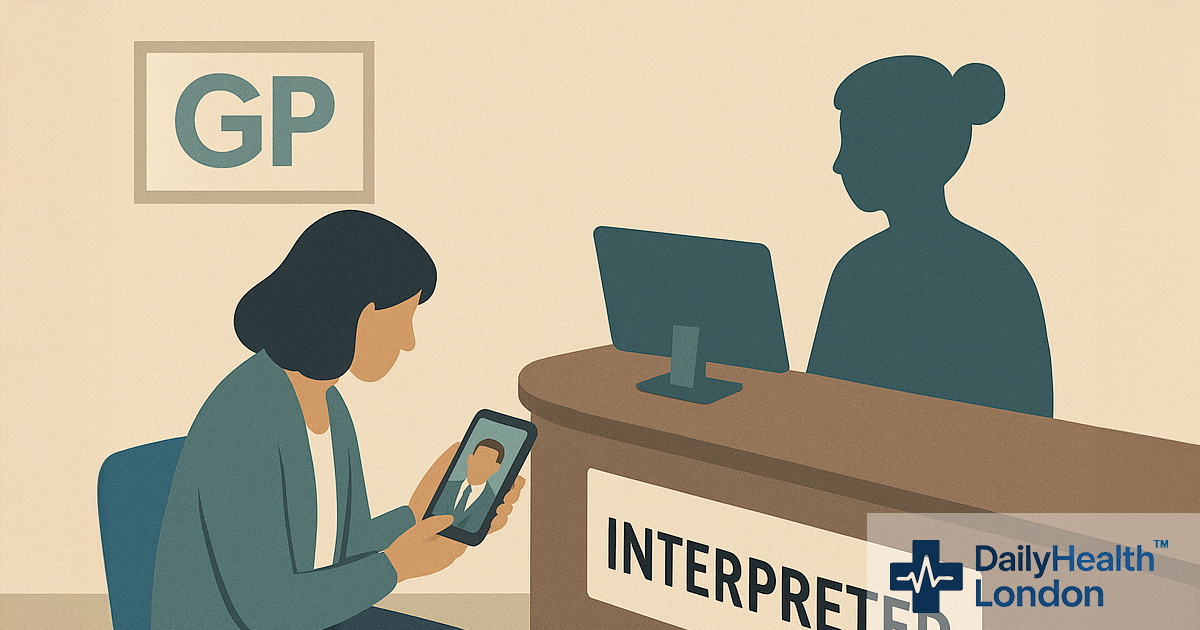
Across Camden’s GP practices, a North Central London initiative is reshaping how patients who speak little or no English book and attend routine appointments, as from early 2025 surgeries begin standardising a new mix of telephone, video and in-person interpreting that grew out of a local review first proposed before the pandemic and refreshed in line with national guidance this year.
The starting point was a Camden Clinical Commissioning Group survey of community organisations on language support in general practice, which closed in February 2020 and found that about ninety six per cent of interpreting for GP appointments was delivered face to face, with only four per cent using telephone support. Commissioners signalled that this model was unlikely to remain sustainable and set out plans to redesign services so that everyday consultations could draw more on telephone and video interpreting, while complex or sensitive conversations retained in-person interpreters.
That local work now sits within a much wider push on language equity. A national interim report on community languages, translation and interpreting services, published in 2024 for NHS England’s Healthcare Inequalities Improvement Programme, estimates that around one million people in the UK cannot speak English well, based on 2021 Census data. The same report notes that English language barriers are more common in some parts of the country than others, with North Central London identified as the integrated care system where 5.3 per cent of the population is estimated to have a language barrier, compared with just 0.3 per cent in Cornwall.
For everyday primary care in Camden, that translates into busy reception desks and phone lines where interpreting is now treated as part of core access rather than a specialist add-on. Practice teams are being encouraged to record a patient’s preferred language early in the registration process and to flag it on electronic records so that clinicians can book professional interpreters automatically rather than relying on family members to translate. When a routine blood pressure review or asthma check is scheduled, staff can arrange for an interpreter to join via telephone or video, with the option to switch to face-to-face support if the conversation becomes more complex than expected.
National data on general practice activity shows the scale of the appointments where language support might be needed. NHS England’s Appointments in General Practice statistics for July 2025 record that 367 million appointments took place across England in 2024, an increase of more than twenty per cent in five years, and that in July 2025 specifically 63.1 per cent of appointments were delivered face to face while 43.7 per cent took place on the same day they were booked. In Camden, where many residents live, work or study across borough boundaries, this mix of on-the-day bookings and in-person visits adds to the pressure to make interpreting easy to organise at short notice.
The same national translation and interpreting report underlines the consequences when that does not happen. It highlights evidence from the NHS Race and Health Observatory and other bodies showing that inconsistent access to interpreters contributes to late presentation of illness, missed appointments and medication errors, and estimates that while around seventy five and a half million pounds a year is currently spent on translation and interpreting services across the NHS, a level closer to two hundred and fifty to three hundred million pounds would be needed to match underlying demand from people with language barriers. In practical terms, this means many patients simply “get by” without the support they need.
Camden’s review of GP language services explicitly set out to challenge that pattern. The consultation material describes a model in which routine appointments use telephone interpreters to keep waiting times down and make better use of short slots, while people who are vulnerable, have mental health needs or are receiving serious news such as a cancer diagnosis continue to be offered face-to-face support. The proposed framework also includes an option to upgrade to video interpreting mid-appointment if it becomes clear that more nuanced discussion is needed than a voice line alone can provide.
For patients, the changes are most visible in small details of everyday interactions. Deaf residents and people with communication support needs told local Healthwatch organisations in earlier research that telephone booking systems could leave them relying on relatives to call surgeries on their behalf, adding delays and undermining privacy. In response, Camden GP practices are among those exploring alternatives such as online request forms, SMS channels and reception desks trained to book interpreters without challenging a patient’s right to support, bringing local practice closer to recommendations set out in the national community languages framework and by organisations such as National Voices.
The work in North Central London also reflects a broader recognition that language barriers and digital exclusion often go together. Analysis in the improvement framework notes that people with limited English proficiency are more likely to live in the most deprived ten per cent of neighbourhoods and to experience difficulties accessing digital health tools. That has prompted local primary care networks to think about how interpreting fits with the NHS App, online triage platforms and text messaging, for example by recording language preferences on clinical systems and considering when appointment reminders or test results should be sent in translated form rather than defaulting to English.
Behind the policy detail, the case for reform remains practical and immediate. The national translation and interpreting report calculates that inadequate provision can drive up costs through increased emergency admissions, avoidable diagnostic tests and litigation linked to adverse events, while also undermining trust in services among communities who may already feel marginalised. Camden’s GP language review and the newer North Central London work on the Language Line contract both frame investment in interpreters not only as a question of fairness, but as a way of making ordinary consultations, screening appointments and long-term condition reviews run more smoothly for staff as well as patients.
As the redesigned interpreting model beds in through late 2025 and into 2026, Camden’s experience will offer a test of whether telephone and video support can be scaled up without losing the human connection that in-person interpreters provide for more complex appointments. With North Central London carrying one of the highest proportions of residents with a language barrier anywhere in England, the way its GP practices organise everyday communication will be a key part of how accessible London’s primary care system feels to people who do not speak English well, and how confidently those patients seek help when they need it.
-
www.nationalvoices.org.ukhttps://www.nationalvoices.org.uk/publication/community-languages-translation-and-interpreting-services/
-
www.england.nhs.ukhttps://www.england.nhs.uk/long-read/improvement-framework-community-language-translation-and-interpreting-services/
-
digital.nhs.ukhttps://digital.nhs.uk/data-and-information/publications/statistical/appointments-in-general-practice/july-2025