Central City family hub opens online route to early years help
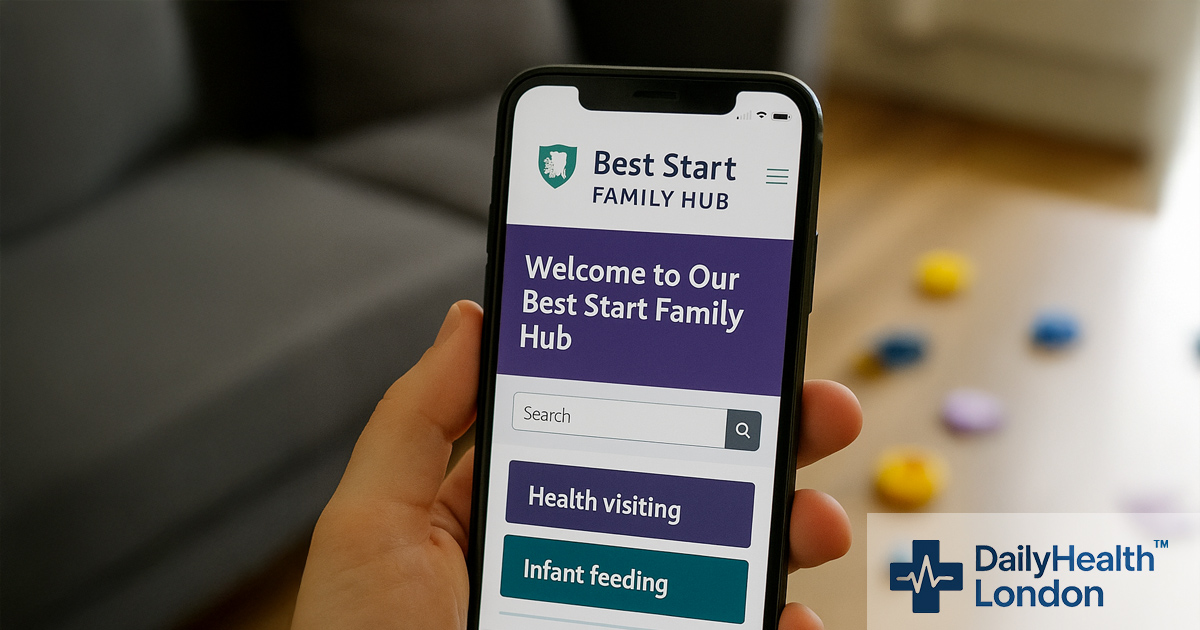
In the Square Mile, the City of London Best Start Family Hub has moved early years health information onto a single online front door, reshaping how parents of babies, toddlers and teenagers find support from September 2025 onwards by bringing health visiting, infant feeding advice and youth services into one digital space that links back to clinics, children’s centres and specialist teams on the ground.
The hub is designed for families living in or using services within the City, offering information for children and young people aged nought to nineteen, with additional sections for those with special educational needs and disabilities and for care leavers up to twenty five. Instead of searching multiple websites, parents now start on a single site and follow clear paths to health visiting checks, breastfeeding support, mental health services and youth activities, reflecting national guidance that family hubs should bring Start for Life and wider services together in one visible offer.
On a typical weekday, the online hub sits behind the scenes of everyday health contacts. A parent who has just had a baby might open it on a phone while travelling through central London, use a postcode-based search to confirm where the six to eight week health visitor review will take place, then click through to see what breastfeeding groups or infant feeding helplines operate nearby. The same platform signposts to local debt advice, housing information and employment schemes, acknowledging that worries about money or cramped housing can carry as much weight in a child’s start in life as routine checks with a nurse or doctor.
This local move is part of a wider national shift. Seventy five upper tier local authorities in England have received dedicated Family Hubs and Start for Life funding since 2022, backed by more than three hundred million pounds of central government investment, to join up services for babies, young children and their carers. At the same time, ministers have set out plans for up to one thousand Best Start family hubs across every English council area by 2028, supported by a five hundred million pound programme announced in 2025. Together, these policies aim to replace what charities describe as a patchy landscape of early years support with a more consistent network of places and platforms where families can turn.
National statistics suggest the effort is beginning to show up in health data as well as in digital maps. The Office for Health Improvement and Disparities reports that the prevalence of breastfeeding at six to eight weeks after birth in England rose to fifty five point six per cent in 2024 to 2025, up from fifty two point seven per cent in 2023 to 2024, the highest level since the current collection began in 2015 to 2016. The same commentary notes that more than half of upper tier local authorities with comparable data saw their local breastfeeding rates improve over the past year, although there are still wide gaps between areas.
Health visitor activity has increased too. Updated health visitor service delivery metrics for England show that in 2024 to 2025, eighty five point one per cent of infants received their six to eight week review by eight weeks of age, up from eighty one point eight per cent the year before, while coverage of the twelve month review by fifteen months reached eighty eight point four per cent. All four post birth universal reviews now have coverage above eighty per cent nationally, although there is still marked variation between local authorities.
In the City of London, the Best Start Family Hub is intended to make those mandated contacts easier to navigate. The online pages group health visiting reviews with explanations of what each check involves, who families can expect to see and how results feed into wider child development measures at two to two and a half years. National child development statistics show that eighty one point four per cent of children in England were at or above the expected level of development at their two to two and a half year review in 2024 to 2025, up from the previous year but with a wide band between the highest and lowest scoring areas.
The City hub also reflects lessons from earlier local and national programmes about digital access. Guidance for local authorities on publishing Start for Life offers emphasises that information should be easy to find, written in clear language and accessible on mobile devices, because many parents browse on phones between shifts or while caring for other children. In response, the Best Start hub uses short sections, repeat signposting and embedded accessibility tools to support people with limited English or additional communication needs, while still pointing to face to face services for those who prefer to speak with staff in person.
Equity is a central concern. National thematic reviews of Start for Life services highlight that families in more deprived areas often have greater need but face more barriers to engaging with support, ranging from transport costs to mistrust of institutions. The same reviews encourage local systems to combine data on health visiting contacts, breastfeeding, child development and family feedback to identify where families are missing out. In a small area like the City, the digital hub provides one place to bring that intelligence together, allowing commissioners and public health teams to see whether families in social housing blocks or private rented homes are using the hub in the same way as those in newer developments.
Community participation runs alongside the data. The City of London hub links to parent panels, voluntary sector groups and peer support networks that contribute content, report gaps and help test new features. National surveys of Start for Life areas suggest that when families are involved in shaping local offers, they are more likely to use services and recommend them to others, particularly when they see practical help with feeding, relationships and mental wellbeing rather than isolated appointments. In this context, the hub becomes as much a shared noticeboard as a directory, reflecting a move away from one way communication towards ongoing conversation with residents.
For Londoners who split their time between home, work and childcare across borough boundaries, the Best Start Family Hub is only one piece of a wider system that still spans multiple councils and providers. Yet its launch in 2025 marks a clear step in how early years health information is organised in the capital’s financial district: placing health visiting reviews, infant feeding guidance and youth support within a single branded space that is designed to be reachable in a few taps. As Best Start hubs roll out nationally from April 2026, the experience of this small, densely populated area will help show whether digital front doors can genuinely narrow the gaps in who finds everyday help, and how quickly, when a new baby or growing child needs support.
-
www.cityoflondon.gov.ukhttps://www.cityoflondon.gov.uk/services/children-and-families/our-best-start-family-hub
-
www.gov.ukhttps://www.gov.uk/government/collections/family-hubs-and-start-for-life-programme
-
www.gov.ukhttps://www.gov.uk/government/statistics/health-visitor-service-delivery-data-for-2024-to-2025
-
www.gov.ukhttps://www.gov.uk/government/statistics/breastfeeding-at-6-to-8-weeks-data-for-2024-to-2025
-
www.gov.ukhttps://www.gov.uk/government/publications/start-for-life-services-thematic-review
-
www.beststartinlife.gov.ukhttps://www.beststartinlife.gov.uk/
-
www.theguardian.comhttps://www.theguardian.com/society/2025/jul/06/one-stop-family-hubs-to-be-opened-in-all-english-council-areas