UCLH discharge lounge revamps calmer, art-filled journeys home
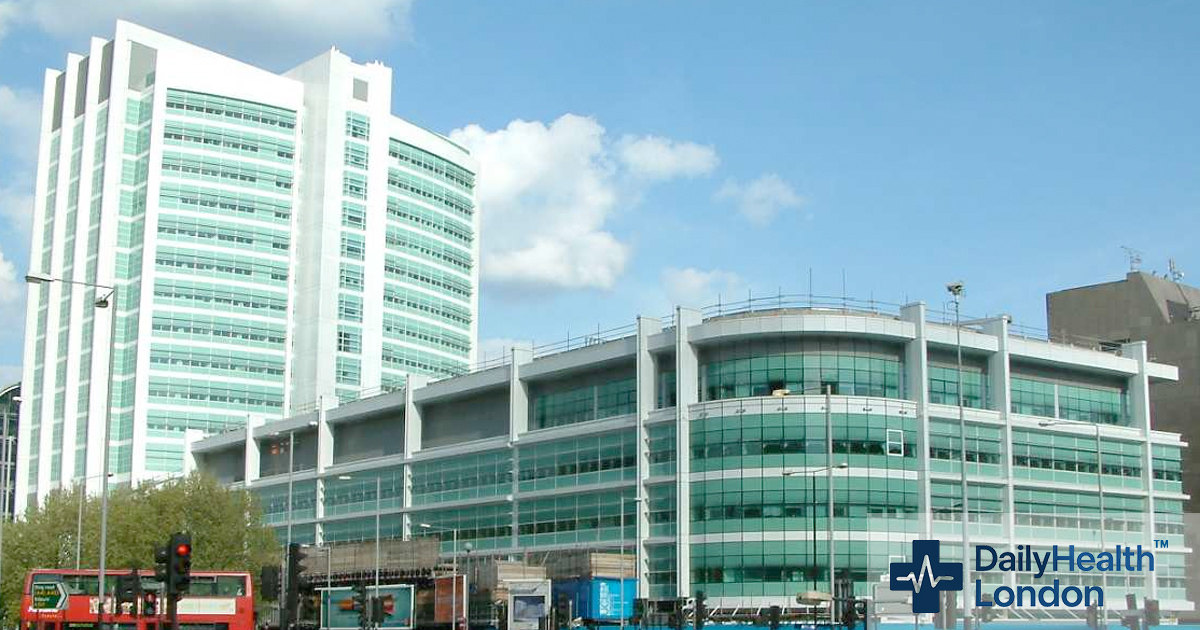
At University College Hospital in central London, the discharge lounge has been quietly reshaped over the past year into a calmer, more colourful stop-off between ward and home, as teams respond to national pressure to move patients on safely while also making the last hour of a hospital stay feel less like waiting in a corridor and more like arriving in a living room. The refreshed space now combines 24-hour visiting, step-free access and new artwork with the routine paperwork of going home.
The lounge sits close to reception, acting as a holding area for people whose treatment is complete but who are still waiting for transport, medicines or final checks. UCLH visiting guidance lists the discharge lounge as having open visiting around the clock, with one visitor allowed at any time, making it one of the few areas in the hospital where family or friends can sit alongside a patient regardless of early-morning or late-evening pick-up times. For many relatives juggling work and caring roles, this flexible timetable is as important as clinical care itself.
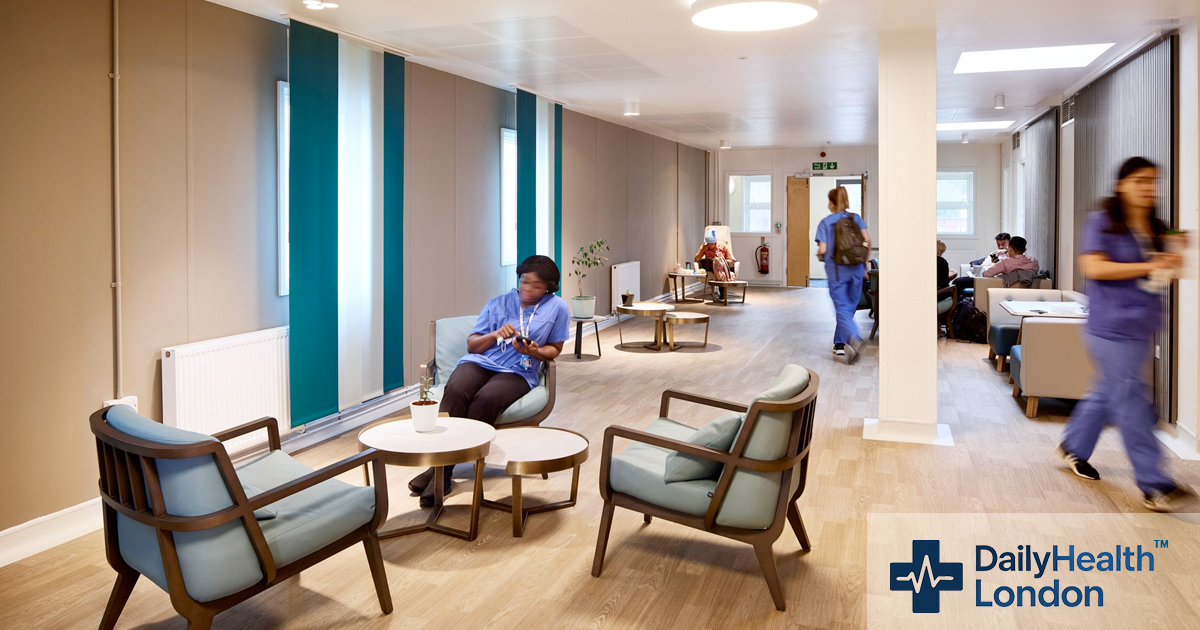
Hospital information for day-case procedures such as gastroscopy describes how, once observations are stable and the numbness from throat spray has passed, nurses accompany patients from procedure rooms to the lounge, where they wait for transport home or a companion to arrive. Rather than returning to busy wards, people recovering from short procedures spend their final stretch in a quieter space with recliner chairs and refreshments, easing the transition from clinical monitoring back to ordinary life on London’s streets outside.
Physical layout is a central part of this shift. Accessibility guides for the UCH Grafton Way building describe lounge and day-room areas with level access, vinyl flooring and enough clear space for wheelchair users to manoeuvre, alongside door widths of around 86cm. Those measurements may sound technical, but they matter for patients who use walking aids, parents pushing buggies and porters steering trolleys. A discharge space that can be entered without steps or tight turns makes it easier for people with limited mobility to leave on their own terms rather than feeling hurried.
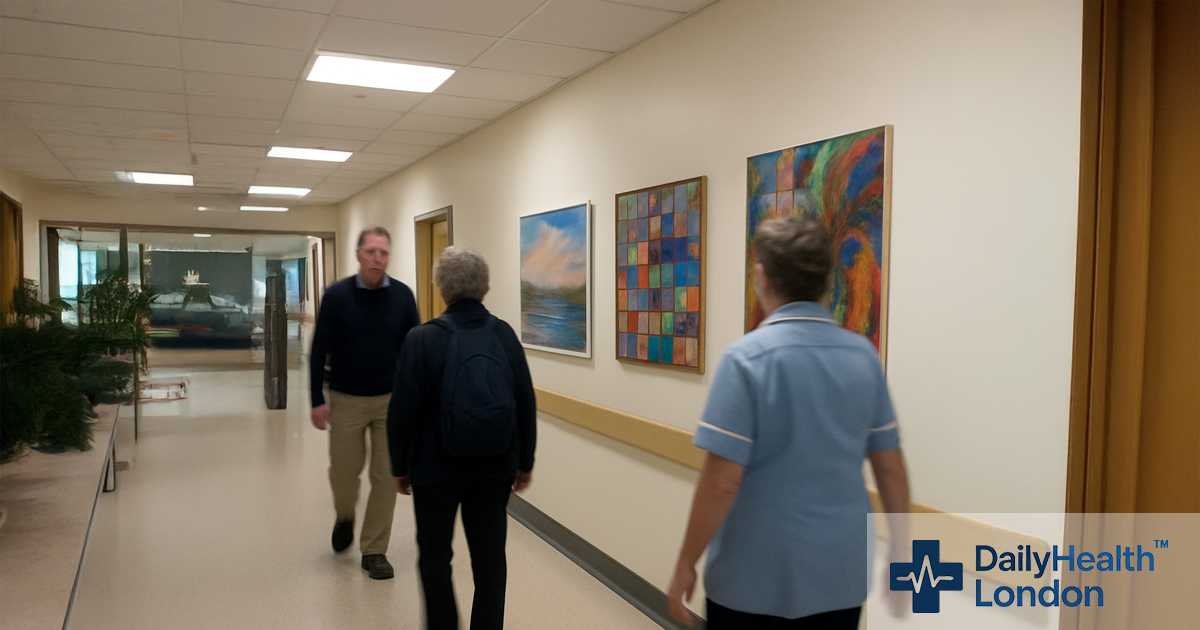
The visual environment has changed too. In September 2024 UCLH’s arts and heritage team unveiled new patient-created artwork in one of the hospital’s outpatient clinics, part of a programme that brings paintings and installations into public areas. The same approach is being extended to circulation spaces used for discharge, where prints, lightboxes and wall panels replace blank surfaces. The aim is not simply decoration but a modest lift in mood at the point when patients are often tired, anxious about going home or processing new medication routines after long admissions.
These local steps sit against a national backdrop in which timely discharge has become a barometer of how well health and care services fit together. Analysis by the Nuffield Trust, published in September 2025, shows that the average number of long-stay patients delayed in leaving hospital in England rose to 6,213 in June 2025, having previously fallen by 16 per cent between January and June 2024 to 5,908. The think tank argues that when more people stay in beds after they are ready to leave, capacity becomes tighter for everyone else in need of a ward place.
NHS England has tried to shine a clearer light on these patterns through new intermediate care data collections. Statistical releases on delayed discharges in acute settings, updated in July 2025, now provide trust-level information on how long people remain in hospital after a decision that they no longer need to reside is recorded, covering every month from April 2024 onwards. For hospitals such as UCLH, this means that the performance of discharge lounges and related services is monitored not just in anecdote but in daily and monthly numbers that can be compared with regional and national peers.
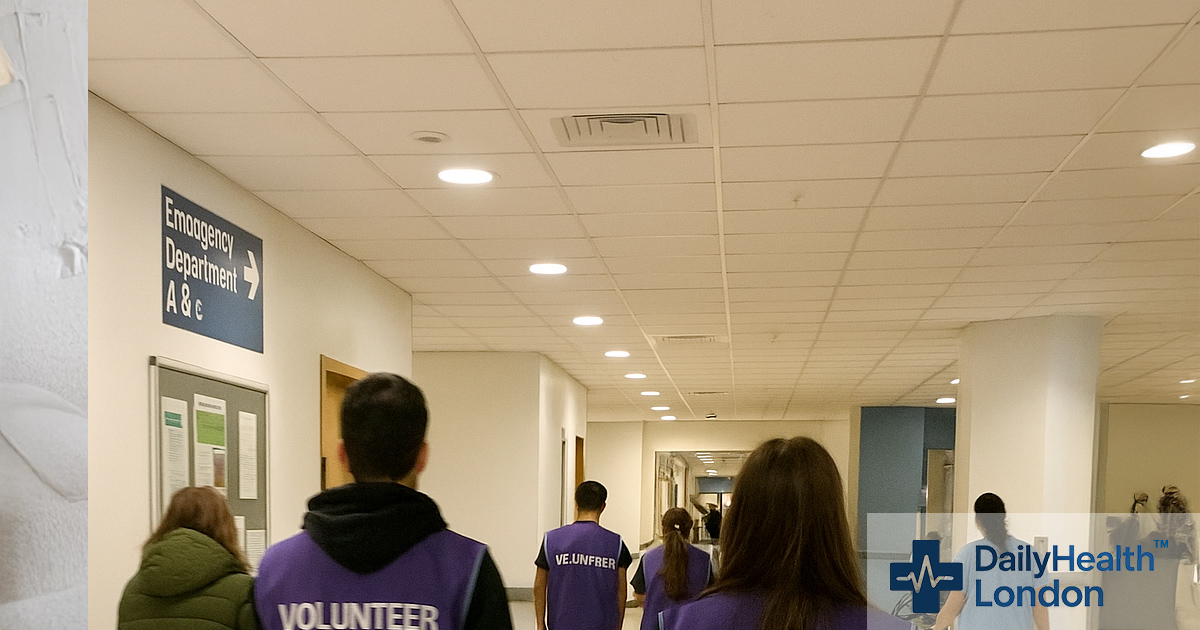
Staff working in and around the lounge describe how these pressures shape everyday routines. On busy mornings, ward teams identify who is medically fit to leave and move them to the lounge while beds are prepared for new admissions. Pharmacy staff bring labelled medicines directly to the area, administrative staff check follow-up appointments and transport staff coordinate volunteer drivers or patient transport vehicles. The new seating layout and artworks are intended to make that flurry of tasks feel less like a holding bay and more like a staging post for returning to normal life.
For patients and families, the changes show up in smaller, practical ways. A relative who finishes a night shift can now visit at any time to accompany someone home, rather than having to slot in around narrow visiting windows. People waiting for taxis use phone charging points to confirm pick-up times via apps, while others sit quietly under large prints rather than facing rows of clinical posters. Those who have spent weeks in hospital sometimes treat the lounge as a decompression space, asking staff final questions about community nursing visits or equipment deliveries before stepping outside. The combination of open visiting and calmer surroundings is designed to reduce the sense of abruptness that can come with discharge.
The lounge also has a role in staff wellbeing. Nurses, therapists and support workers who escort patients there know that their colleagues on the wards will gain back bed space more quickly, and that people are leaving from a space that feels more humane. Arts and environment teams report that staff often pause at the same wall pieces as patients, using them as a brief mental break between tasks. In a hospital where clinical teams are under sustained pressure to move patients through tightly scheduled pathways, small adjustments to the atmosphere of a shared area can make time spent there more bearable for everyone.
Seen from the street outside, none of this is immediately obvious. The main clues are shorter waits for beds when ambulances arrive and fewer last-minute scrambles to find space for admissions. Inside, however, the reworked discharge lounge serves as a hinge between high-tech treatment floors and the everyday realities of buses, lifts, stairwells and kitchens that patients are returning to. By focusing on accessible design, open visiting and an arts programme rooted in patient experience, UCLH is trying to ensure that going home feels like part of care rather than an afterthought — a small but significant piece of London’s wider effort to make day-to-day health services work more smoothly.
-
www.uclh.nhs.ukhttps://www.uclh.nhs.uk/patients-and-visitors/visitors/ward-visiting-times
-
www.uclh.nhs.ukhttps://www.uclh.nhs.uk/about-us/who-we-are/arts-and-heritage-1/news-and-events/latest-news/patient-artwork-unveiled-university-college-hospital
-
www.nuffieldtrust.org.ukhttps://www.nuffieldtrust.org.uk/resource/delayed-discharges-from-hospital
-
digital.nhs.ukhttps://digital.nhs.uk/data-and-information/publications/statistical/mi-nhse-delayed-discharges-in-an-intermediate-care-setting
-
www.accessable.co.ukhttps://www.accessable.co.uk/university-college-london-hospitals-nhs-foundation-trust/university-college-hospital-grafton-way-building