Delayed discharge metrics sharpen focus on London lounges

On 1 February 2025 NHS hospitals in England reported 22,028 patients who no longer met the “criteria to reside”, of whom 8,062 were discharged that day and 13,966 remained in beds, leaving London trusts among those trying to turn new discharge metrics into faster moves out of hospital and into community or social care support.
NHS England has now formalised a “discharge ready date” statistic that measures the time between a clinician declaring a patient ready to leave and the actual date of discharge, and from 2025–26 this sits alongside Better Care Fund planning metrics on discharge delays for each health and wellbeing board area, giving London systems a clearer line of sight on how long people wait after treatment before a slot in the next setting is available.
Analysis by The King’s Fund of people staying at least 14 days in hospital shows that in March 2025 an average of 9,309 long-stay patients a day in England were delayed in leaving, with 3,203 of those delays attributed to capacity, 2,639 to interface processes and the remainder to hospital processes, care transfer hubs and wellbeing concerns, highlighting how constrained formal care markets and handover points can slow flow in large urban systems such as London.
A parliamentary committee paper using NHS England data for January 2025 adds a sharper percentage: nearly three in five (58.5%) patients who were medically ready for discharge on a typical day that month were still in acute beds, a pattern that members linked directly to uneven social care capacity and that London integrated care boards must manage on top of already high baseline occupancy.
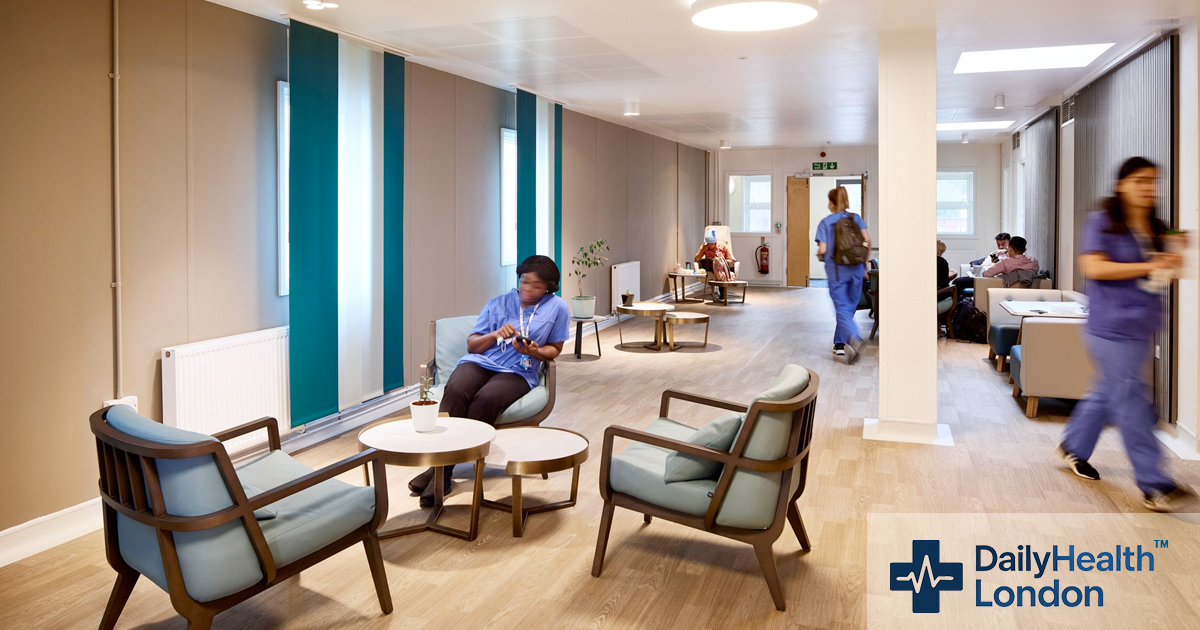
Hospitals have turned to discharge lounges to unlock ward beds earlier, with government updates in June 2023 noting that Northwick Park Hospital in north-west London received more than £360,000 to upgrade its lounge with six beds and ten chairs, expected to improve flow for nearly 2,500 patients, while Barts Health describes its discharge lounge as a staffed area with seating for 20 people and three stretcher beds where patients wait for medication, transport or final paperwork away from inpatient wards.
Taken together, the counts and rates sketch a system in which thousands of people each day remain in hospital despite being clinically ready to leave, more than half of them still occupying acute beds at points in early 2025, while London sites use targeted capital for discharge lounges to shave hours off individual waits and make better use of beds even as underlying social care capacity remains a binding constraint.