Social prescribing moves GP help closer to daily London life
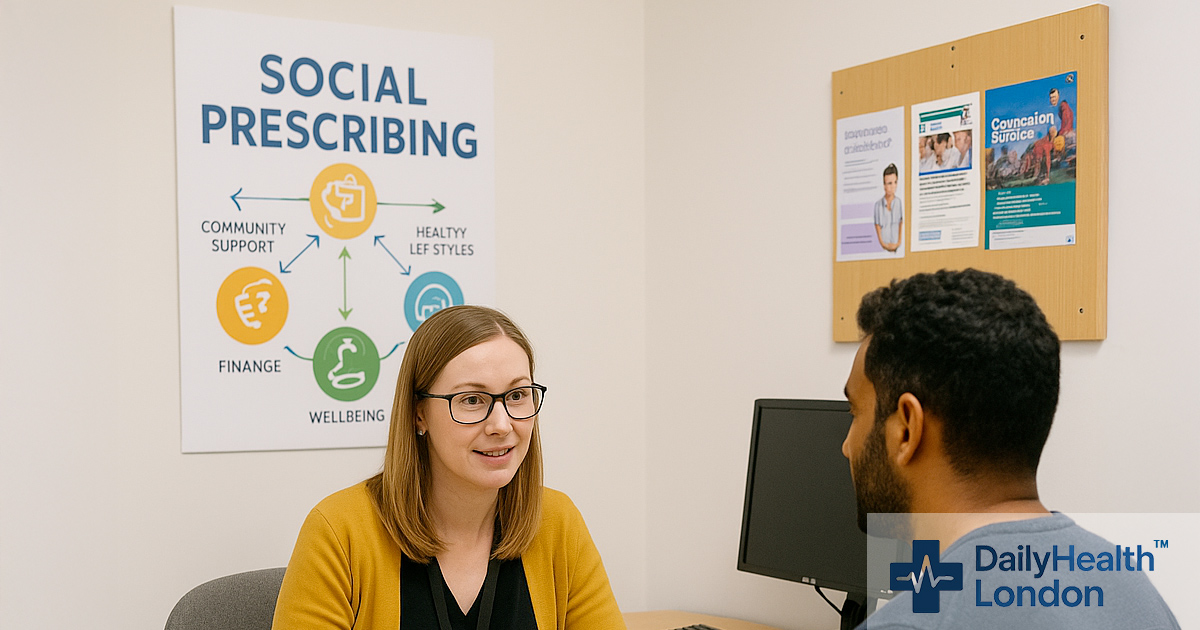
At one inner-city GP practice in London, social prescribing link workers now sit alongside nurses and reception staff as part of the everyday team, giving patients who come in with money worries, housing problems or loneliness a route to local community support rather than only another prescription or follow-up appointment.
The shift has been building since the NHS Long Term Plan in 2019, when NHS England committed to introducing social prescribing link workers into primary care networks so that every person could access a service through their GP, starting with 1,000 new link workers by 2020–21 and a goal that at least 900,000 people would be referred to social prescribing by 2023–24, with national evaluations in 2023 suggesting that referrals had already exceeded those targets as practices adjusted their routines.
Data from the National Academy for Social Prescribing show how these referrals look in practice, with one evaluation in West Kent reporting that of 4,927 people referred between October and December 2023, 41% were seeking help to improve mental and social wellbeing and 39% needed support around housing, finances or employment, a pattern mirrored in London as link workers spend much of their time on benefit forms, debt advice signposting and community activity groups rather than purely health-focused tasks.
Evidence gathered during the cost-of-living crisis helps explain why London GPs are leaning on this model, with a 2022 survey by the Money and Mental Health Policy Institute, summarised in a 2024 mental health briefing, finding that 59% of UK adults reported that rising living costs were negatively affecting their mental health and 21% felt unable to cope, while a separate 2024 survey of 2,000 adults for HR firm Ciphr reported that 54% had felt stressed or overwhelmed by higher living costs that year and 21% had struggled to pay bills or buy food.
The same mental health briefing cites research showing how these pressures fall unevenly, including findings from late 2022 that 56% of Black, Asian and other ethnic minority workers in the UK felt despair about increased living costs and 41% feared losing their job because of rising prices, underlining why London surgeries serving diverse and lower-income communities are likely to see more patients whose primary problems are financial or social rather than strictly clinical.
Within GP practices, primary care network workforce statistics describe social prescribing link workers as part of a wider Additional Roles Reimbursement Scheme that has grown since 2019, and in London that means many practices now let patients book directly into link worker clinics or follow up a GP consultation with a longer appointment focused on what matters to the person, whether that is joining a local walking group, negotiating a payment plan with a utility company or finding free childcare support.
Day to day, this leaves London patients navigating GP reception desks that increasingly offer a choice between a traditional consultation and a conversation with a link worker, while the success of the approach will depend less on national targets and more on whether overstretched voluntary organisations, housing advisers and community groups across the capital have enough capacity to receive the steady stream of referrals coming from primary care.